Fullmetal Alchemist Watch Order: The Ultimate Guide
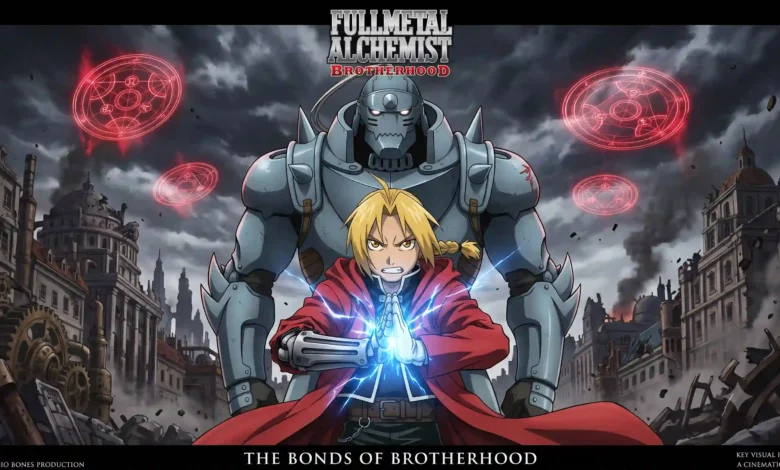
Fullmetal Alchemist (FMA), created by the brilliant mangaka Hiromu Arakawa, is widely considered to be the magnum opus of the anime medium. Consistently holding the #1 spot on global anime ranking charts for over a decade, it is a masterclass in world-building, emotional storytelling, and philosophical depth. Following the tragic journey of two brothers, Edward and Alphonse Elric, as they search for the legendary Philosopher’s Stone to restore their mutilated bodies, it is a must-watch for anyone entering the anime community.
However, when new viewers decide to finally take the plunge into the world of Amestris, they are immediately met with a massive, confusing roadblock. If you search for “Fullmetal Alchemist” on any streaming platform, you will be presented with two entirely different, full-length television series: Fullmetal Alchemist (2003) and Fullmetal Alchemist: Brotherhood (2009). Furthermore, there are two distinct theatrical movies, several OVAs, and live-action adaptations clogging up the search results.
Fans constantly flood forums with questions like: “Which version should I watch?”, “Is Brotherhood a sequel?”, and “Do I have to watch the 2003 version to understand the 2009 version?”
To help you navigate the Law of Equivalent Exchange without losing an arm and a leg, we have created the most comprehensive and detailed episode guide available anywhere on the internet. We will provide the definitive Fullmetal Alchemist chronological watch order, settle the 2003 vs. Brotherhood debate once and for all, break down the core lore of the series, and give you a master list of how to navigate the franchise without missing a single canon moment. Before you draw your transmutation circle, check out our about us page, or explore more anime watch orders on our site.
- Watch on Crunchyroll (Fullmetal Alchemist: Brotherhood Available)
- Watch on Hulu (Brotherhood Available – US Only)
- Note: The original 2003 series and the “Conqueror of Shamballa” movie frequently rotate on and off streaming platforms due to licensing issues. They are often best found on physical Blu-ray or specific regional VOD services.
The Great Debate: FMA 2003 vs. FMA Brotherhood
To truly understand the watch order, you must understand why there are two different anime adaptations of the exact same manga. The answer lies in the harsh realities of the anime production industry in the early 2000s.
Fullmetal Alchemist (2003)
When Studio Bones began animating the first Fullmetal Alchemist series in 2003, Hiromu Arakawa’s manga was still in its very early stages of publication. Because anime episodes are produced much faster than manga chapters are drawn, the anime quickly caught up to the source material. Instead of pausing the anime or creating dozens of pointless “filler” episodes to buy time, Arakawa personally requested that Studio Bones write their own, entirely original ending to the story.
As a result, the 2003 anime starts off following the manga but completely diverges around Episode 25. The villains, the ultimate antagonist, the lore behind the Homunculi, and the final resolution of the 2003 anime are 100% anime-original and non-canon to the manga. Tonally, the 2003 version is much darker, slower-paced, and functions more as a character-driven psychological drama.
Fullmetal Alchemist: Brotherhood (2009)
Years later, as the manga was finally approaching its epic conclusion, Studio Bones decided to reboot the franchise. Fullmetal Alchemist: Brotherhood is not a sequel, nor is it a spin-off. It is a completely faithful, 1-to-1 adaptation of Hiromu Arakawa’s original manga from chapter one to the final page.
Because the studio assumed that most people had already seen the 2003 anime, Brotherhood drastically rushes the pacing of its first 14 episodes to get to the “new” manga material faster. Tonally, Brotherhood is much more of a traditional, epic shonen adventure, featuring massive battles, a larger cast of characters (including the Xingese cast, who were entirely omitted from the 2003 version), and a globally scaled, world-ending climax.
Understanding the Lore: Alchemy and the Homunculi
To fully appreciate the narrative mastery of Fullmetal Alchemist, you need a firm grasp of the in-universe science and the villains that populate it. Here is a breakdown of the core concepts you will encounter.
Alchemy and Equivalent Exchange
In the world of Amestris, magic does not exist. Instead, characters use Alchemy, an advanced scientific practice of understanding, deconstructing, and reconstructing matter. However, alchemy is bound by a strict, unbreakable rule: The Law of Equivalent Exchange. “In order to obtain or create something, something of equal value must be lost or destroyed.” You cannot create a sword out of thin air; you must pull the iron from the surrounding earth.
The ultimate taboo in alchemy is Human Transmutation—the attempt to bring the dead back to life. When Edward and Alphonse Elric attempted to resurrect their dead mother, the Law of Equivalent Exchange demanded a brutal toll. Edward lost his left leg, and Alphonse lost his entire physical body. In a desperate bid to save his brother’s soul, Edward sacrificed his right arm to bind Alphonse’s soul to a hollow suit of armor.
The State Military
The country of Amestris is a heavily militarized, authoritarian state overseen by King Bradley. Alchemists who pass a rigorous exam can join the military as “State Alchemists,” earning research funding, immense authority, and a customized title (e.g., Edward is the “Fullmetal Alchemist,” Roy Mustang is the “Flame Alchemist”). However, they are deeply resented by the civilian population, who view them as “Dogs of the Military” and living weapons of mass destruction used in brutal civil wars like the Ishvalan Extermination.
The Homunculi
The primary antagonists of the series are the Homunculi—immortal, artificially created humans who possess regenerative abilities and unique supernatural powers. They are named after the Seven Deadly Sins: Lust, Gluttony, Envy, Greed, Sloth, Wrath, and Pride. Interestingly, the origin of the Homunculi is the biggest difference between the two anime adaptations. In the 2003 anime, Homunculi are the tragic, deformed byproducts of failed Human Transmutation attempts. In Brotherhood, they are the fragmented emotions deliberately extracted from a central, ancient villain known only as “Father.”
The Complete Fullmetal Alchemist Watch Orders
Because the two television series are completely separate continuities, you have two different paths you can take. We have outlined both the “Completionist” order and the “Manga Purist” order below.
Order 1: The Completionist Route (Highly Recommended)
If you have the time, watching both series in release order provides the absolute best experience. As mentioned earlier, Brotherhood rushes through the emotional early arcs (like the tragic Nina Tucker storyline and the Hughes backstory). Watching the 2003 series first allows you to deeply connect with the characters before jumping into the grand, epic scale of Brotherhood.
- Fullmetal Alchemist (2003 TV Series) – Watch Episodes 1–51
- Movie 1: Conqueror of Shamballa – This theatrical movie serves as the definitive, final conclusion to the 2003 anime timeline. Do not skip it if you watched the 2003 series.
- Fullmetal Alchemist: Brotherhood (2009 TV Series) – Watch Episodes 1–64
- Movie 2: The Sacred Star of Milos – An optional, standalone side-story movie that takes place roughly around Episode 20 of Brotherhood.
Order 2: The Manga Purist Route (The Short Route)
If you do not want to watch the non-canon, alternate timeline of the 2003 series and only want to experience the story exactly as original creator Hiromu Arakawa wrote it, follow this path:
- Fullmetal Alchemist: Brotherhood (2009 TV Series) – Watch Episodes 1–64
- Fullmetal Alchemist: Brotherhood OVAs – Watch the 4 optional side-story OVAs (The Blind Alchemist, Simple People, The Tale of Teacher, Yet Another Man’s Battlefield).
Franchise Canon vs. Filler Breakdown
Because the 2003 anime had to invent its own ending, almost 50% of it is technically “Anime-Original” when compared to the manga. However, if you view the 2003 series as its own independent timeline, the internal pacing is quite strong. Brotherhood, on the other hand, is one of the most faithful adaptations in anime history, boasting virtually zero filler.
| Series / Part | Total Episodes | Manga Canon | Filler / Anime-Original | Filler Percentage |
|---|---|---|---|---|
| Fullmetal Alchemist (2003) | 51 | Approx. 25 | 26 (Anime-Original Ending) | ~50% (To the Manga) |
| FMA: Conqueror of Shamballa | 1 Movie | 0 | 1 (Anime-Original Finale) | 100% |
| FMA: Brotherhood (2009) | 64 | 63 | 1 (Episode 1 is Anime-Original) | ~1% |
| FMA: Sacred Star of Milos | 1 Movie | 0 | 1 (Standalone Story) | 100% |
Detailed Part-by-Part Episode Guide
Use the expandable accordions below to read a deeply detailed, spoiler-free summary of every major era of the franchise. This will help you understand the thematic shifts between the two versions of the story and navigate the placement of the theatrical movies.
1. Fullmetal Alchemist (The 2003 Adaptation)
- Status: Alternate Timeline (Diverges from Manga)
- Summary: The 2003 adaptation begins with a masterful, deeply emotional exploration of Edward and Alphonse’s childhood, their tragic attempt at Human Transmutation, and their early days working for the State Military under Roy Mustang. The first half of the series closely follows the manga, featuring iconic, heartbreaking storylines like the Shou Tucker chimera incident and the serial killer Barry the Chopper. However, around the midway point (the infiltration of the 5th Laboratory), the story splinters. The anime introduces an original villain named Dante, drastically alters the identities and origins of the Homunculi, and leads to a dark, controversial, and mind-bending conclusion that bridges the world of Alchemy with real-world historical Europe.
- Verdict: HIGHLY RECOMMENDED. While it isn’t manga canon, the 2003 series features phenomenal character development and a hauntingly beautiful soundtrack (including the iconic opening “Melissa” by Porno Graffitti).
2. The Movie: Conqueror of Shamballa (2005)
- Status: Canon to the 2003 Anime Timeline Only
- Summary: The 2003 television series ends on a massive cliffhanger with the Elric brothers separated across dimensions. Conqueror of Shamballa is a feature-length theatrical film that serves as the definitive series finale to the 2003 storyline. Taking place in Munich, Germany, during the rise of the Nazi party in 1923, a powerless Edward Elric must find a way to reopen the dimensional gate to Amestris to reunite with his brother, while thwarting a secret society attempting to use alchemy for world domination.
- Verdict: MUST WATCH (If you watched the 2003 series). Do not watch this if you only watched Brotherhood, as the plot will make absolutely zero sense.
3. Fullmetal Alchemist: Brotherhood (Episodes 1–33)
- Status: 100% Manga Canon (Except Episode 1)
- Summary: Brotherhood reboots the story. Episode 1 is an anime-original, fast-paced action sequence designed to introduce the entire cast to returning fans. From Episode 2 onward, the series faithfully adapts the manga. Because the studio assumed viewers had seen the 2003 version, the emotional beats of the early arcs are rushed, condensing roughly 25 episodes of content into just 14 episodes. However, once the brothers arrive in the city of Rush Valley and encounter the Xingese royalty (Ling Yao and May Chang), the series enters entirely new, unadapted manga territory. The stakes drastically escalate as the Elrics discover that the entire country of Amestris is a giant, bloody transmutation circle designed by the Homunculi.
- Verdict: MUST WATCH. This is the definitive canonical storyline.
4. Fullmetal Alchemist: Brotherhood (Episodes 34–64)
- Status: 100% Manga Canon
- Summary: The second half of Brotherhood is widely considered to be one of the greatest stretches of episodes in anime history. As the overarching villain, “Father,” initiates his plan for the “Promised Day,” the various fractured factions—the Elric brothers, Roy Mustang’s loyal military squad, the Xingese royalty, the Ishvalan survivors led by Scar, and the chimera rebels from the North—all converge on Central Command for a massive, multi-front war. The series culminates in an incredibly satisfying, emotionally resonant, and perfectly executed finale that leaves no loose ends.
- Verdict: MUST WATCH. The climax of Brotherhood cements its legacy as the undisputed king of shonen anime.
5. The Movie: The Sacred Star of Milos (2011)
- Status: Non-Canon (Standalone Side Story)
- Summary: Released after the conclusion of Brotherhood, this theatrical film is a completely standalone adventure. Edward and Alphonse travel to the distant, impoverished valley of Milos, which sits on the border of Amestris and the rival nation of Creta. They get caught up in a violent rebellion led by the mysterious Julia Crichton, who seeks to harness the power of a “blood star” (a lesser Philosopher’s Stone) to liberate her oppressed people.
- Verdict: OPTIONAL. The movie features a drastically different, more fluid art style (handled by Studio Ghibli animators) and spectacular action sequences. However, because it is a standalone story that does not impact the main plot of Brotherhood, it is entirely optional. If you choose to watch it, it chronologically fits best around Episode 20 of Brotherhood.
The Live-Action Adaptations
In recent years, Netflix produced a trilogy of Japanese live-action Fullmetal Alchemist movies starring Ryosuke Yamada as Edward Elric (Fullmetal Alchemist, The Revenge of Scar, and The Final Alchemy).
Like most live-action anime adaptations, these films condense massive amounts of the manga into a very short runtime, resulting in rushed pacing, awkward CGI for Alphonse’s armor, and stiff acting. They are completely separate from the anime continuities. We strongly recommend sticking to the animated series and avoiding the live-action films unless you are a die-hard fan looking for morbid curiosity.
Frequently Asked Questions (FAQ)
Can I watch Brotherhood without watching the 2003 version?
Yes, absolutely. Brotherhood is a complete, self-contained story from beginning to end. It is not a sequel to the 2003 series. You will not miss any crucial plot points if you skip the 2003 version, though you may feel that the first 14 episodes of Brotherhood move a bit too fast.
Why did the 2003 version change the story so drastically?
It wasn’t a malicious decision by the animation studio. When the 2003 anime began production, Hiromu Arakawa (the manga author) had only published a fraction of the story. She specifically requested that Studio Bones create a different, original ending so that the anime wouldn’t spoil the conclusion of her manga, which she intended to draw for several more years.
What is the “Fullmetal” in Fullmetal Alchemist?
A common misconception among newcomers is that Alphonse (the giant suit of armor) is the “Fullmetal Alchemist.” In reality, Edward is the Fullmetal Alchemist. “Fullmetal” is the official codename granted to him by the State Military upon passing his alchemy exam, referencing his automail (metal prosthetic) right arm and left leg.
Is the music different between the two versions?
Yes, both series feature completely different, yet equally legendary, soundtracks. The 2003 version is famous for its orchestral, emotional tracks (composed by Michiru Oshima) and the hit opening “Ready Steady Go” by L’Arc-en-Ciel. Brotherhood features a massive, sweeping epic score by Akira Senju and boasts what many consider to be the greatest collection of anime openings in history, including “Again” by YUI and “Hologram” by NICO Touches the Walls.
Does Fullmetal Alchemist: Brotherhood have a happy ending?
Without spoiling the specific details, yes. Brotherhood is famous for having one of the most definitive, universally satisfying, and conclusive endings in all of anime. Every major character arc is wrapped up perfectly, making the 64-episode investment incredibly worthwhile.