Neon Genesis Evangelion Watch Order: The Ultimate Guide
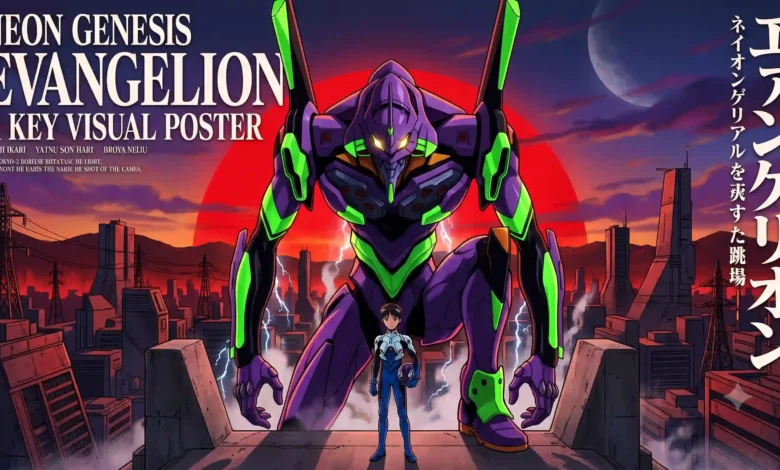
Neon Genesis Evangelion (NGE) is not just an anime; it is a profound cultural milestone that forever altered the landscape of the mecha genre and the anime industry as a whole. Created by visionary director Hideaki Anno and produced by Studio Gainax in 1995, what begins as a standard “giant robots fighting aliens” story rapidly devolves into a harrowing, avant-garde exploration of severe depression, psychoanalysis, religious symbolism, and existential dread.
However, getting into Evangelion today is an incredibly intimidating and confusing prospect for newcomers. The franchise does not follow a simple, linear path. Due to famous budget constraints and the deteriorating mental health of its creator during the original broadcast, the original TV series features an incredibly controversial, abstract ending.
To “fix” this, a theatrical movie (The End of Evangelion) was released to provide a definitive, cinematic conclusion. Over a decade later, Hideaki Anno returned to completely reboot the franchise with a four-part movie series known as the Rebuild of Evangelion. This leaves new fans staring at their screens, desperately searching Google with questions like: “What is Death and Rebirth?”, “Do I watch the TV ending or the movie ending?”, and “Are the Rebuilds a sequel or a remake?”
To help you navigate the Human Instrumentality Project without suffering a complete psychological breakdown, we have created the most comprehensive, deeply detailed episode guide available anywhere on the internet. We will provide the definitive Neon Genesis Evangelion chronological watch order, explain the complex lore of NERV and the Angels, break down the crucial differences between the TV series and the Rebuilds, and guide you through the Director’s Cut episodes. Before you get in the robot, check out our about us page, or explore more anime watch orders on our site.
- Watch on Netflix (Houses the original 26-episode TV series, the End of Evangelion movie, and Death(True)²)
- Watch on Amazon Prime Video (Exclusive global home for the four Rebuild of Evangelion theatrical movies)
The Root of the Confusion: Why Are There So Many Endings?
Before you dive into the watch order, you must understand the production history of the franchise, as it directly dictates how you should watch it.
During the production of the original 1995 anime, Studio Gainax famously ran out of budget and time as they approached the final two episodes (Episodes 25 and 26). Furthermore, director Hideaki Anno was pouring his own profound struggles with clinical depression directly into the script. The result was a finale that abandoned the overarching sci-fi plot (the war against the Angels) entirely. Instead, Episodes 25 and 26 take place entirely within the minds of the main characters, using abstract sketches, flashing text, and psychoanalytic dialogue to resolve their internal traumas.
While this ending was hailed by some as a brilliant avant-garde masterpiece, it infuriated millions of fans who wanted a literal, narrative conclusion to the apocalyptic war. In response, Gainax secured funding to create The End of Evangelion (1997), a massive theatrical film that replaces Episodes 25 and 26. It provides the brutal, apocalyptic, and visually stunning real-world conclusion to the storyline.
Years later, Anno founded his own studio (Studio Khara) to create the Rebuild of Evangelion—a four-movie series designed to retell the story with modern animation and a completely different narrative trajectory, unbound by the constraints of the 1990s.
Understanding the Deep Lore: NERV, Angels, and Evas
To fully appreciate the narrative mastery of Evangelion, you need a firm grasp of the incredibly dense, Judeo-Christian-inspired lore that dictates the actions of the characters. Here is a massive breakdown of the core concepts you will encounter.
The Angels and the Second Impact
In the year 2000, a cataclysmic event known as the Second Impact melted the ice caps, shifted the Earth’s axis, and wiped out half of the human population. The public was told this was caused by a meteor strike in Antarctica. In reality, it was caused by a classified human expedition discovering and awakening the “First Angel,” a gigantic, god-like entity named Adam.
Fifteen years later (the present day of the anime), humanity is under attack by the Angels—bizarre, terrifying, and wildly diverse cosmic entities that seek to reach Tokyo-3. Their goal is to reunite with the remains of Adam (or the Second Angel, Lilith), an event that would trigger the Third Impact and completely eradicate the human race.
NERV and the Evangelion Units
Conventional military weapons, including nuclear warheads, are completely useless against the Angels due to their “A.T. Fields” (Absolute Terror Fields)—impenetrable force fields generated by their souls. To combat this threat, the United Nations established NERV, a shadowy paramilitary organization led by the ruthless and calculating Gendo Ikari.
NERV’s solution is the Evangelion (EVA). While they appear to be giant mechanical robots, the Evas are actually massive, horrific biological clones of the original Angels, bound in cybernetic armor to keep them under control. Because the Evas are biological and possess their own latent souls, they must be piloted by 14-year-old children who can neurologically “synchronize” with the nervous system of the beast. If an Eva takes damage, the pilot feels the exact physical pain of a severed limb or crushed skull.
SEELE and the Human Instrumentality Project
While NERV fights the Angels on the surface, they secretly answer to SEELE, a deeply secretive cabal of global elites who possess the “Dead Sea Scrolls”—prophecies detailing the arrival of the Angels. While SEELE funds NERV to defeat the Angels, their true, ultimate goal is not the survival of humanity, but its forced evolution.
This goal is called the Human Instrumentality Project. SEELE believes that humanity has reached an evolutionary dead end, cursed by loneliness, pain, and the barriers between individual minds (the A.T. Field). Their plan is to artificially trigger the Third Impact, using an Evangelion to dissolve the physical bodies of every human on Earth, merging all of humanity’s souls into a single, collective, god-like consciousness where pain and loneliness no longer exist.
Core Character Psychological Profiles
The true heart of Evangelion is its brutal, unapologetic deconstruction of anime tropes through deeply flawed, psychologically traumatized characters. Understanding their mental states is critical to understanding the overarching watch order.
- Shinji Ikari (The Reluctant Hero): The 14-year-old pilot of EVA Unit-01. Unlike traditional, hot-blooded mecha protagonists, Shinji is deeply traumatized, plagued by severe abandonment issues after his father (Gendo) left him at a young age. He pilots the Eva not out of heroism, but out of a desperate, crippling need for validation and praise from the adults around him. He represents the “Hedgehog’s Dilemma”—desiring warmth from others but terrified of getting close enough to be hurt.
- Asuka Langley Soryu (The Tsundere Deconstructed): The fiery, arrogant German-Japanese pilot of EVA Unit-02. She masks a profound, crushing inferiority complex and deep childhood trauma behind a wall of aggressive superiority. Her self-worth is entirely tied to her ability to pilot the Eva; when she fails, her mental state rapidly collapses into catastrophic depression.
- Rei Ayanami (The Kuudere Deconstructed): The emotionless, mysterious pilot of EVA Unit-00. She is entirely subservient to Gendo Ikari and appears to lack basic human desires or fear of death. Her storyline explores themes of identity, cloning, and what it truly means to possess a human soul.
- Misato Katsuragi (The Flawed Mentor): NERV’s operations director and Shinji’s legal guardian. While she puts on the facade of a cheerful, beer-drinking older sister, she is deeply scarred by the Second Impact and struggles with intimacy, intimacy issues, and a burning, self-destructive desire for revenge against the Angels.
The Complete Evangelion Chronological Watch Order
To experience the story of Evangelion properly, you must divide your viewing into two distinct eras: The Original Timeline and The Rebuild Timeline. Here is the absolute best, most widely accepted watch order in the global anime community.
Phase 1: The Original Masterpiece Timeline
This is the classic, 1990s era of the franchise. It is mandatory viewing. You cannot jump to the modern movies without watching this first.
- Neon Genesis Evangelion (TV Series) – Watch Episodes 1–24.
- *Crucial Note on Director’s Cuts: Episodes 21, 22, 23, and 24 have updated “Director’s Cut” versions. You MUST watch the Director’s Cut versions (which is the default version on Netflix), as they add massive amounts of lore and character backstory that are vital for the movie ending.
- Neon Genesis Evangelion (TV Series) – Watch Episodes 25 & 26.
- *Note: This is the controversial, abstract psychological ending. While some suggest skipping this and going straight to the movie, we highly recommend watching it to understand the character’s internal resolutions before watching the physical resolution.
- The End of Evangelion (Theatrical Movie – 1997) – This is the true, cinematic finale to the original series. It takes place chronologically concurrently with Episodes 25 and 26.
Phase 2: The Rebuild Timeline
Produced between 2007 and 2021, these four movies completely reboot the franchise with stunning modern animation. While the first movie closely follows the early episodes of the TV show, the subsequent movies veer off into a completely different, wildly unpredictable new storyline.
- Evangelion: 1.11 You Are (Not) Alone (Movie 1)
- Evangelion: 2.22 You Can (Not) Advance (Movie 2)
- Evangelion: 3.33 You Can (Not) Redo (Movie 3)
- Evangelion: 3.0+1.01 Thrice Upon a Time (Movie 4 – The Final Conclusion)
Franchise Canon vs. Filler Breakdown
Because Neon Genesis Evangelion is an original anime production (meaning it was not adapted from a pre-existing manga, but rather the manga was written alongside the anime), there are absolutely zero filler episodes in the entire franchise.
Every single episode, every agonizingly long silence, and every abstract visual sequence is 100% canon to Hideaki Anno’s original vision. You cannot skip any numbered episodes of the television series.
| Series / Movie | Format | Status | Can I Skip It? |
|---|---|---|---|
| NGE TV Series (Eps 1-24) | 24 Episodes | 100% Canon | No (Start Here) |
| NGE TV Series (Eps 25-26) | 2 Episodes | Canon (Psychological Ending) | No (Highly Recommended) |
| The End of Evangelion | 1 Movie | Canon (Physical Ending) | No (Mandatory) |
| Death and Rebirth / Death(True)² | 1 Movie | Recap Movie | YES (Safely Skip) |
| Rebuild Movies (1.11 to 3.0+1.0) | 4 Movies | Canon (Modern Reboot) | No (Mandatory Sequel Experience) |
Detailed Story Arc Breakdown
Use the expandable accordions below to read a deeply detailed, spoiler-free summary of every major era of the franchise. This will help you understand the jarring shifts in tone as the series progresses.
1. The Action Arc (Episodes 1–13)
- Status: 100% Canon
- Summary: The series begins as a relatively straightforward, albeit highly polished, mecha anime. Shinji Ikari arrives in Tokyo-3, is forced into the cockpit of EVA Unit-01 by his estranged father, and begins battling the bizarre Angels. As he moves in with Misato and begins attending school, he slowly builds a fragile support system, befriending his classmates and eventually teaming up with fellow pilots Rei and Asuka. The tone during these early episodes balances tense, strategic military operations with slice-of-life comedy and the awkward trials of adolescence.
- Verdict: MUST WATCH. These episodes build the emotional foundation that the second half of the series will mercilessly tear down.
2. The Psychological Descent Arc (Episodes 14–24)
- Status: 100% Canon (Ensure you watch the Director’s Cut versions of 21-24)
- Summary: The tone of the series takes a massive, irreversible plunge into darkness. As the Angel attacks become increasingly bizarre and psychologically invasive (attacking the pilots’ minds rather than just their bodies), the mental states of Shinji, Asuka, and Misato rapidly deteriorate. Dark secrets regarding NERV, the true nature of the Evangelions, and the Human Instrumentality Project are slowly revealed. The animation style becomes increasingly abstract and claustrophobic as the characters are pushed past their breaking points, introducing the fan-favorite character Kaworu Nagisa in Episode 24.
- Verdict: MUST WATCH. This is the era of the show that cemented its legacy as a psychological masterpiece.
3. The TV Ending (Episodes 25 & 26)
- Status: Canon (Internal Resolution)
- Summary: The overarching narrative completely halts. Due to budget constraints, these episodes take place entirely within the collective consciousness of the main characters during the climax of the Human Instrumentality Project. Through a series of avant-garde visual sequences, line drawings, and intense psychological interrogations, Shinji is forced to confront his self-hatred, his fear of others, and his ultimate desire to exist.
- Verdict: MUST WATCH. While jarring, it provides the ultimate emotional closure to Shinji’s character arc.
4. The End of Evangelion (Theatrical Movie)
- Status: Canon (External Resolution)
- Summary: This cinematic masterpiece replaces Episodes 25 and 26 with the literal, real-world events that were happening while the characters were experiencing their psychological breakdown. SEELE launches a massive, brutal military assault on NERV headquarters to forcibly initiate the Third Impact. It features some of the most spectacular, terrifying, and iconic animation ever put to film, culminating in a devastating, world-ending climax that will leave you staring at the credits in stunned silence.
- Verdict: MUST WATCH. This is widely considered one of the greatest anime films ever created.
5. The Rebuild of Evangelion Movies (1.11 to 3.0+1.0)
- Status: Canon Reboot / Reimagining
- Summary: Years later, Hideaki Anno returned to create four new movies. While 1.11 acts as a beautiful, high-definition remaster of the first 6 episodes of the TV show, 2.22 drastically alters the storyline, introduces a new character (Mari Illustrious Makinami), and ends with a cataclysmic event. 3.33 and 3.0+1.01 thrust the franchise into a completely unrecognizable, post-apocalyptic future, offering a final, meta-textual goodbye to the entire franchise.
- Verdict: MUST WATCH. They offer a more hopeful, action-packed, and definitive farewell to the characters.
Frequently Asked Questions (FAQ)
What is “Evangelion: Death and Rebirth” or “Death(True)²”?
If you are watching on Netflix, you will see a movie titled Death(True)². You can completely skip this. It is simply a highly compressed, 70-minute recap movie of the first 24 episodes of the TV show, originally released in Japanese theaters to catch audiences up before The End of Evangelion premiered. It offers zero new story content.
Are the Rebuild movies a remake or a sequel to the original show?
This is the greatest debate in the Evangelion fandom. Officially, they are a “retelling” of the story. However, without venturing into massive spoiler territory, there are numerous visual clues and meta-textual elements in the films that heavily imply the Rebuilds take place in a “time loop” or “meta-sequel” universe following the events of The End of Evangelion. Because of this, it is absolutely mandatory to watch the original 1995 series before watching the Rebuilds.
Why is the Netflix dub different from the original?
When Netflix acquired the global streaming rights to the original series in 2019, they completely re-translated the script and hired an entirely new English voice cast. The original 1990s ADV dub (featuring Spike Spencer as Shinji and Tiffany Grant as Asuka) is beloved by nostalgic fans but suffered from translation inaccuracies and clunky 90s voice direction. The new Netflix dub (VSI) is vastly more accurate to the original Japanese script, though some fans criticize it for being “too literal” and emotionally stiff in certain scenes. Both are viable ways to watch the show.
Why did the Netflix version change the ending song?
In the original Japanese broadcast and the classic DVD releases, every episode ended with a different smooth jazz rendition of Frank Sinatra’s “Fly Me to the Moon.” Due to massive global music licensing costs, Netflix was unable to secure the rights to the song for worldwide streaming. The iconic ending theme was replaced by a somber instrumental piano track from the show’s original score.