Tokyo Ghoul Watch Order & Filler List: The Ultimate Guide
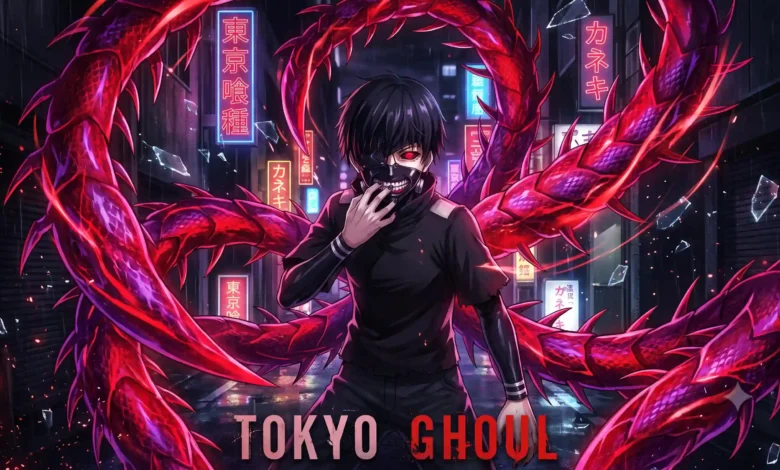
Tokyo Ghoul, based on the critically acclaimed dark fantasy manga by Sui Ishida, features one of the most gripping and tragic premises in modern anime history. Following the harrowing journey of Ken Kaneki, an ordinary college student who accidentally becomes a half-ghoul and must consume human flesh to survive, the first season is universally praised as a dark psychological masterpiece. It seamlessly blends visceral horror, breathtaking action, and deeply philosophical questions about humanity and monstrosity.
However, once you finish Season 1, the franchise becomes notoriously confusing for newcomers. Season 2 (officially titled Tokyo Ghoul √A or “Root A”) deviates wildly from the original manga into an anime-original storyline. Then, Season 3 (Tokyo Ghoul:re) suddenly jumps several years forward in time, changes the entire main cast, and acts as if the anime-original events of Season 2 never happened. This jarring transition leaves anime-only watchers completely lost, desperately searching for answers.
To help you navigate this fractured and tragic timeline, we have created the most detailed, comprehensive episode guide available on the internet. We will provide the definitive Tokyo Ghoul chronological watch order, fully explain the infamous “Root A” alternate timeline problem, break down the crucial differences between the anime and the manga, and tell you exactly where the prequel OVAs fit. Before venturing into the dangerous streets of the 20th Ward, check out our about us page, or explore more anime watch orders on our site.
- Watch on Crunchyroll (Full Series & OVAs)
- Watch on Hulu (Full Series – US Only)
The “Root A” Problem: Why is the Tokyo Ghoul Timeline Broken?
Before you look at the watch order, you absolutely must understand why the timeline feels so disjointed. Tokyo Ghoul Season 2 (Root A) is an alternate timeline.
When the first season of the anime concluded, the manga was still ongoing. Instead of waiting for more source material to be published, the animation studio (Studio Pierrot) decided to diverge from the manga for the second season. Sui Ishida, the original creator, actually wrote a massive, multi-hundred-page draft for an alternate storyline specifically for Root A. However, Studio Pierrot largely scrapped his draft, creating a bizarre hybrid season that mixed anime-original plot points with out-of-context manga events.
The biggest divergence happens in episode 1 of Season 2. In the manga, after Kaneki is brutally tortured by Yamori (Jason), he forms his own independent faction to hunt down villains and protect his friends at Anteiku. In the Root A anime, Kaneki inexplicably decides to join Aogiri Tree—the very terrorist organization that just tortured him.
The real confusion sets in when you start Season 3 (Tokyo Ghoul:re). When Studio Pierrot adapted :re, they decided to abandon their alternate timeline and adapt the manga directly. This means Season 3 acts as a sequel to the manga’s version of events, completely ignoring the ending of Season 2. If you only watch the anime, you will experience a massive gap in logic, character deaths, and character development between Seasons 2 and 3.
*Pro Tip: For the definitive Tokyo Ghoul experience, we highly recommend reading the original manga from chapters 60 to 143 after finishing Season 1, and then returning to the anime for Season 3. If you do not read the manga, you will be missing critical information about Kaneki’s final battle with Kisho Arima, which happens entirely off-screen in the anime.
Understanding the World: Ghouls, Quinques, and the CCG
To fully appreciate the watch order and the lore of Tokyo Ghoul, especially as you transition into :re, you need a firm grasp of the in-universe factions and terminology.
The Factions
- Anteiku: A peaceful ghoul organization operating out of a coffee shop in the 20th Ward. Led by Yoshimura, they only scavenge the bodies of suicide victims to survive, refusing to murder humans. They take Kaneki in and teach him how to blend into human society.
- Aogiri Tree: A radical, militant ghoul terrorist organization that believes ghouls are the supreme species. They actively slaughter humans and CCG investigators to assert dominance.
- The CCG (Commission of Counter Ghoul): A federal agency acting as a specialized police force dedicated to hunting down and exterminating ghouls to protect humanity. Their investigators are known as “Doves.”
The Power System
- Kagune: A ghoul’s predatory organ used as a weapon. It emerges from their back and takes different forms (Ukaku, Koukaku, Rinkaku, and Bikaku) depending on the ghoul’s RC cell type. Kaneki possesses a Rinkaku, which takes the form of blood-red, scaling tentacles.
- Kakugan: The distinctive red-and-black eye that manifests when a ghoul is hungry or using their Kagune. Because Kaneki is a rare half-ghoul, he only possesses one Kakugan (earning him the nickname “The One-Eyed Ghoul”).
- Quinque: Weapons manufactured by the CCG from the harvested Kagunes of deceased ghouls. Because regular bullets and knives cannot pierce ghoul skin, CCG investigators must use Quinques to fight them on equal footing.
The Complete Tokyo Ghoul Chronological Watch Order
If you prefer to stick strictly to the anime despite the timeline inconsistencies and omitted manga content, here is the complete, definitive chronological watch order. This order seamlessly integrates the two highly important prequel OVAs (Original Video Animations) into the timeline before the time-skip of Season 3.
- Tokyo Ghoul (Season 1) – Watch Episodes 1–12
- Tokyo Ghoul √A (Season 2) – Watch Episodes 1–12 (Keep in mind this is an Alternate Timeline)
- OVA 1: Tokyo Ghoul: “Jack” – Watch after Season 2. (A crucial prequel focusing on a young Kisho Arima).
- OVA 2: Tokyo Ghoul: “Pinto” – Watch after Jack. (A prequel focusing on the eccentric Shu Tsukiyama).
- Tokyo Ghoul:re (Season 3, Part 1) – Watch Episodes 1–12
- Tokyo Ghoul:re (Season 3, Part 2) – Watch Episodes 13–24 (The definitive Series Finale)
Franchise Canon vs. Filler Breakdown
Technically speaking, Tokyo Ghoul has zero “filler” episodes in the traditional sense (like comedic beach episodes or pointless recap clip shows). Every single episode progresses the plot forward. The major catch is that an entire 12-episode season is considered “Anime-Original Non-Canon” when compared to Sui Ishida’s source material.
Furthermore, Tokyo Ghoul:re attempts to adapt 179 chapters of a highly detailed, complex manga into just 24 episodes. This results in incredibly rushed pacing where entire story arcs are condensed into a single episode, making it feel disjointed even when it is adapting canon material.
| Series Version | Total Episodes | Manga Canon | Anime-Original (Alternate Canon) |
|---|---|---|---|
| Tokyo Ghoul (Season 1) | 12 | 12 | 0 |
| Tokyo Ghoul √A (Season 2) | 12 | 0 | 12 (Entire Season) |
| Tokyo Ghoul:re (Season 3) | 24 | 24 (Extremely Rushed Pacing) | 0 |
| Total Anime Series | 48 Episodes | 36 Episodes | 12 Episodes |
Detailed Season and OVA Episode Guide
Use the expandable accordions below to read a comprehensive, spoiler-free summary of each major installment. This guide will help you understand the thematic shifts between seasons and how to navigate the jarring transitions that leave so many fans confused.
1. Tokyo Ghoul: Season 1 (Episodes 1–12)
- Status: 100% Canon
- Summary: College student Ken Kaneki is a quiet, bookish young man whose life changes forever when he scores a date with the beautiful Rize Kamishiro. The date ends in tragedy when Rize reveals herself to be a “Binge Eater” ghoul and attempts to devour him. Kaneki barely survives when steel beams crush Rize. He wakes up in the hospital to discover that Rize’s organs were transplanted into him to save his life, turning him into a terrifying half-human, half-ghoul hybrid. Thrust into a hidden, violent underworld, he is taken in by the peaceful ghouls of the Anteiku coffee shop (including Touka Kirishima and Mr. Yoshimura). Kaneki must learn to balance his fraying humanity with his new, monstrous cravings, culminating in his abduction and brutal psychological torture at the hands of Jason.
- Verdict: MUST WATCH. This season is a legendary piece of anime history, ending with one of the most iconic transformations and fight scenes in the medium, perfectly set to the acoustic song “Unravel”.
2. Tokyo Ghoul √A: Season 2 (Episodes 1–12)
- Status: Alternate Timeline (Anime-Original)
- Summary: Following the brutal physical and psychological torture he endured at the end of Season 1, Kaneki’s hair turns stark white and he fully embraces his ghoul side. However, instead of forming his own faction to protect his friends at Anteiku (as he does in the manga), he makes the shocking decision to join Aogiri Tree—the very terrorist organization that just tortured him. The season explores the escalating tension and all-out war between Aogiri Tree, the CCG, and the peaceful ghouls of Anteiku during the devastating Owl Suppression Operation.
- Verdict: PROCEED WITH CAUTION. Root A is a highly controversial season. While it features gorgeous music (including the hauntingly beautiful track “Glassy Sky”), stellar animation, and deeply emotional moments, the plot makes very little sense. You must keep in mind that the ending of this season is entirely ignored by Season 3, and a major fight between Kaneki and Kisho Arima is completely skipped.
3. The Prequel OVAs: Jack and Pinto
- Status: 100% Canon Prequels
- Summary: Before starting Season 3, you should watch these two special episodes.
Tokyo Ghoul: Jack goes back in time to explore the high school days of Kisho Arima, the CCG’s undisputed strongest investigator (known as the “Reaper”). It shows his early days hunting ghouls alongside a delinquent classmate, providing crucial backstory for his stoic character.
Tokyo Ghoul: Pinto focuses on the eccentric “Gourmet” ghoul, Shu Tsukiyama, during his high school years. It details how he met his human friend Chie Hori, showcasing a surprisingly softer side to the otherwise unhinged villain from Season 1.
- Verdict: RECOMMENDED. They provide excellent, high-quality backstory for major characters who play massive roles in the upcoming Tokyo Ghoul:re.
4. Tokyo Ghoul:re - Parts 1 & 2 (Season 3, Episodes 1–24)
- Status: Manga Canon (Very Fast Pacing)
- Summary: Two years have passed since the CCG’s devastating raid on Anteiku in the 20th Ward. The story completely shifts focus to Haise Sasaki, a top-ranking, soft-spoken CCG investigator. Haise is tasked with leading the “Quinx Squad”—a special, experimental team of humans (Urie, Shirazu, Mutsuki, and Saiko) who have had ghoul quinques surgically implanted into their bodies to give them ghoul powers without the drawbacks. As Haise mentors his squad and battles rogue ghouls like the Nutcracker and the Tsukiyama family, he begins to suffer from terrifying hallucinations and fractured memories of a past life he cannot remember—the life of Ken Kaneki. The second half of the season accelerates toward the final war between ghouls and humanity, as the true identity of the One-Eyed King is revealed.
- Verdict: MUST WATCH. This serves as the official conclusion to the entire Tokyo Ghoul saga. It adapts the entirety of the massive :re manga, providing closure to Kaneki, Touka, and the rest of the surviving cast. However, be prepared for an incredibly rushed pace that skips over a lot of detailed world-building.
Differences Between the Manga and the Anime
Because the anime timeline is so heavily debated, we have compiled a list of the most critical differences between Sui Ishida’s original manga and Studio Pierrot’s anime adaptation. If you choose to read the manga, these are the moments that will vastly improve your experience:
- Kaneki’s Faction: In the manga, Kaneki never joins Aogiri Tree. He forms a rogue splinter group consisting of Tsukiyama, Banjou, and Hinami. They dedicate themselves to destroying ghoul trafficking rings and dismantling Aogiri from the outside to protect Anteiku.
- The Cochlea Raid: In the manga, Kaneki breaks into the CCG’s highest-security ghoul prison (Cochlea) to interrogate a prisoner, leading to a massive, chaotic battle. In the anime, this is completely glossed over, and Kaneki is simply present during an Aogiri attack without clear motivation.
- Kaneki’s Half-Kakuja: In the manga, Kaneki’s descent into madness and his development of a centipede-like “Half-Kakuja” armor is a slow, terrifying burn caused by excessive cannibalism of other ghouls. In the anime, it happens incredibly abruptly.
- The Final Fight with Arima: The most egregious omission in the anime occurs at the end of Root A. In the manga, the Owl Suppression Operation ends with Ken Kaneki facing off against the invincible CCG Reaper, Kisho Arima. Arima brutally defeats Kaneki, stabbing him through the brain and giving him total amnesia. This directly explains why Kaneki wakes up as “Haise Sasaki” working for the CCG in Season 3. The anime skips this fight entirely, leaving Haise’s origins a confusing mystery for anime-only viewers.
Frequently Asked Questions (FAQ)
Why did Kaneki’s hair turn white?
Kaneki’s hair turning stark white during his torture by Jason is a physical manifestation of “Marie Antoinette Syndrome,” a condition where extreme stress, trauma, and terror cause the hair to suddenly lose its pigmentation. In Kaneki’s case, it is combined with the rapid, continuous regeneration of his ghoul cells (RC cells) during the repeated mutilation he suffered for days on end.
Who exactly is Haise Sasaki in Tokyo Ghoul:re?
Haise Sasaki is Ken Kaneki. Following his brutal defeat at the hands of Kisho Arima at the end of the manga’s original run, Kaneki suffered severe brain damage and total amnesia. The CCG decided to brainwash him and utilize his immense strength as a ghoul investigator, giving him the new identity of Haise Sasaki. Throughout :re, his memories slowly bleed back into his consciousness.
Can I skip Tokyo Ghoul Root A (Season 2) entirely?
Technically, yes. Because Season 3 entirely ignores the events of Season 2, watching it isn’t strictly necessary for timeline continuity. However, if you are an anime-only viewer, skipping it means missing out on stellar animation, an incredible soundtrack, and the tragic fates of several major characters from Season 1 (including Hide). The absolute best approach is to watch Season 1, read the manga to see what actually happens, watch Root A just for the visual spectacle, and then skip directly to Tokyo Ghoul:re.
Are the Tokyo Ghoul OVAs canon?
Yes, absolutely! Unlike many other anime OVAs which are just silly side-stories or beach episodes, both Tokyo Ghoul: Jack and Tokyo Ghoul: Pinto are direct adaptations of spin-off manga chapters written and illustrated by the original creator, Sui Ishida. They are 100% canon to the timeline and enrich the lore.
Is the Tokyo Ghoul anime completely over?
Yes. The final episode of Tokyo Ghoul:re (Season 3, Part 2) adapts the definitive, final chapter of the original manga, bringing the war between humans and ghouls to a close. While millions of fans have signed petitions begging for a “Brotherhood” style reboot—one that faithfully adapts the manga from start to finish with proper pacing—Studio Pierrot’s current anime adaptation is officially complete.
Is the Tokyo Ghoul Live-Action Movie worth watching?
The 2017 live-action Tokyo Ghoul film is actually considered one of the better live-action anime adaptations. It covers the events of the first half of Season 1 (the introduction of Rize, Kaneki’s transformation, and the battle against the Dove, Amon). While it doesn’t replace the anime, it is a highly enjoyable, gory adaptation for hardcore fans of the series.